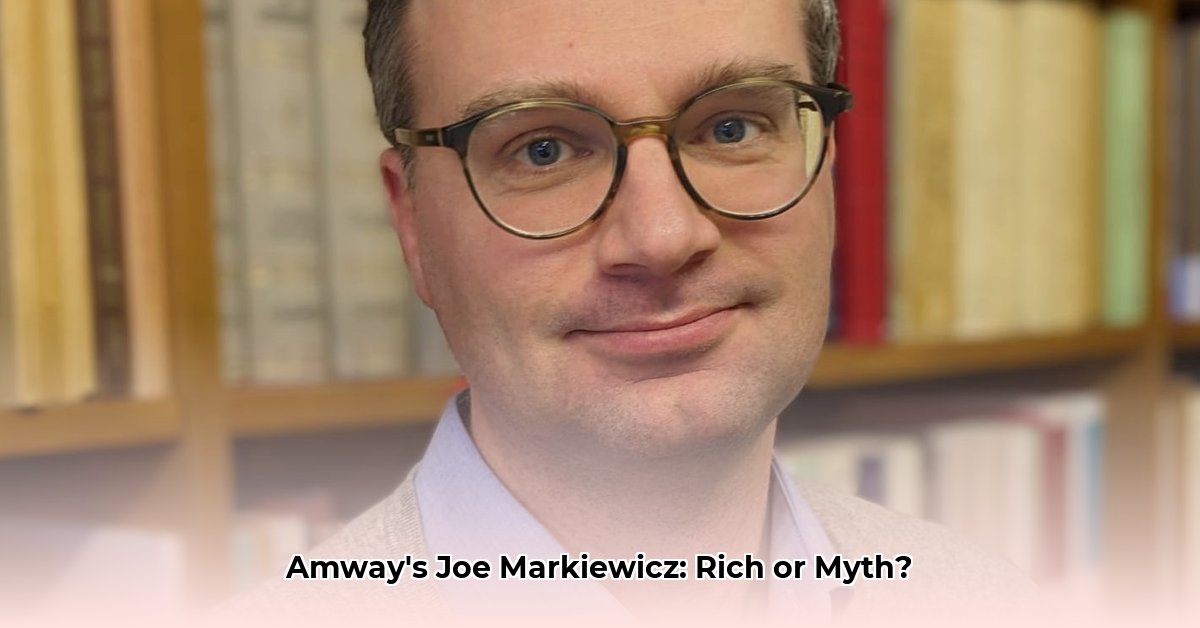
Joe Markiewicz, Chairman of the Independent Business Owners Association International (IBOAI), a key organization within the Amway network, is often associated with significant wealth. Estimates place his 2024 net worth around $10 million, largely attributed to his position within Amway. However, separating fact from marketing hyperbole in the world of multi-level marketing (MLM) requires a deeper investigation. This article examines Markiewicz's net worth, the financial realities of IBOAI, and the controversies surrounding the Amway business model.
IBOAI and Amway: A Closer Look at the Finances
IBOAI, reportedly valued at $25 million (a 19.04% increase year-over-year), serves as a significant support structure for Amway's independent business owners (IBOs). While these figures suggest substantial financial success, a critical analysis is needed. Amway's marketing materials often promise substantial monthly income ($2,000-$3,000) with minimal effort. This narrative, however, contrasts with reports from numerous IBOs who describe substantial time commitment (30+ hours per week) and significant upfront costs, casting doubt on the readily achievable high-income claims. But how realistic is this picture? Is the financial success of top performers truly representative of the average IBO's experience?
Is it realistic to expect a six-figure income from Amway? The lack of detailed financial transparency makes a definitive answer elusive. Amway readily shares success stories focusing on revenue, but crucial expense data remains largely undisclosed. This lack of clarity makes it difficult to accurately assess the financial health of the average IBO. Are hidden costs significantly impacting IBO profits, contradicting the marketed gains? Further investigation is warranted to answer this crucial question.
Larry Winters' Team (LTD) and Allegations of Control
Within the Amway structure, concerns have emerged regarding the internal environment, especially within Larry Winters' Team (LTD). Allegations of a controlling environment, intolerance of dissent, and the use of pressure tactics require careful consideration. The extent to which these allegations reflect a systemic issue within Amway's culture and the potential involvement or knowledge of Joe Markiewicz merit thorough investigation. Are these isolated incidents, or do they represent a broader pattern? This question is key in assessing the ethical considerations surrounding Amway's operations.
Risk Assessment: A Multi-Stakeholder Perspective
Understanding the risks involved for various stakeholders provides a more balanced view:
| Stakeholder | Short-Term Risks | Long-Term Risks |
|---|---|---|
| Aspiring Amway IBOs | High start-up costs; significant time commitment; unrealistic income projections. | Unsustainable income; potential financial hardship; limited career growth. |
| Current Amway IBOs | Hidden costs; inflated income expectations; lower than anticipated returns. | Financial instability; substantial losses; declining earnings. |
| Regulatory Bodies (FTC, etc.) | Deceptive marketing practices; potential pyramid scheme classification. | Need for increased regulation; potential legal action; consumer protection. |
| Researchers/Journalists | Limited access to financial data; lack of transparency. | Need for in-depth investigations; increased public awareness of potential risks. |
Disclaimer: This analysis offers a balanced perspective and does not constitute financial advice. Independent verification is strongly recommended before making any decisions regarding Amway or related entities.
Unanswered Questions and Future Research
While Markiewicz's net worth appears substantial, understanding the context is crucial. IBOAI's success must be viewed against the backdrop of the entire Amway business model and its inherent challenges. Further research into both claimed incomes and internal operational dynamics, especially within LTD, is essential for a comprehensive understanding. Increased transparency and accountability are vital to separating fact from marketing spin in the often-complex world of MLM. Continued research into Amway’s structure and IBO experiences is crucial to gain a more accurate perspective.
Assessing Amway IBO Success: A Realistic Approach
Key Takeaways:
- Amway success depends on several factors: product sales, network building, and effective mentorship. Individual effort alone may not guarantee success.
- The Amway model emphasizes building a strong downline and community, requiring significant time and interpersonal skills.
- Financial projections should be viewed skeptically, as many IBOs do not earn substantial income.
- Realistic assessment involves examining all income streams, not just initial sales. Long-term success relies on diversification.
- While Amway offers flexibility, it demands discipline and strategic planning; it's not passive income.
The Markiewicz family is often cited as an Amway success story, illustrating the potential rewards but also the substantial investment needed. However, it's important to analyze their specific situation: was their success due to exceptional skills or other factors more broadly applicable?
Analyzing Amway's compensation plan—a multi-tiered system rewarding both sales and recruitment—is crucial. While potentially lucrative for a few, the majority earn little or nothing, often incentivizing recruitment over actual sales. IBOAI provides support, but this needs to be assessed against the actual financial success of the average IBO. Separating marketing from reality is essential.
Evaluating financial claims requires critical thinking. Amway frequently highlights prosperous lifestyles, but these narratives often lack context. Determining realistic success requires considering failure rates, average income, and the availability of verifiable data. Skepticism is warranted where data remains unavailable or unverifiable.
The high time commitment and significant financial risks of Amway must be factored into any realistic assessment. It is not a get-rich-quick scheme. Successful participation requires a thorough self-assessment, evaluating skills, time commitment, financial resources, and the realistically attainable size of a downline.